Monday, January 26, 2015

Republic of Vietnam Gallantry Cross: Anh Dũng Bội Tinh


         The Gallantry Cross was the primary medal for bravery awarded by the Armed Forces of the Republic of Vietnam. The award was issued to countless Vietnamese servicemen and women as well as non-Vietnamese soldiers who served in Vietnam in support of the republic. It was first instituted by the State of Vietnam in 1950, and was later adopted by the republic. It was issued extensively in the subsequent years through 1975.

Gallantry Crosses at an awards ceremony in 1963.


                 The Gallantry Cross came in four degrees, and as a unit citation. The degrees referenced citations for gallantry at different organizational levels. The break-down for these was as follows:


Gallantry Cross with Palm - Armed Forces Level
Gallantry Cross with Gold Star - Corps Level
Gallantry Cross with Silver Star - Divisional Level
Gallantry Cross with Bronze Star - Regimental or Brigade Level
Gallantry Cross with Palm and Frame - Unit Citation

            As the medal was also awarded to foreign military personnel, a large number of United States made examples exist, and continue to be manufactured for veterans today. Most of the United States made Gallantry Crosses that can currently be found are of post-1975 manufacture. Vietnamese made examples were (obviously) only made in Vietnam prior to the end of the republic. It is further likely to assume Vietnamese soldiers were virtually only awarded Vietnamese made medals.
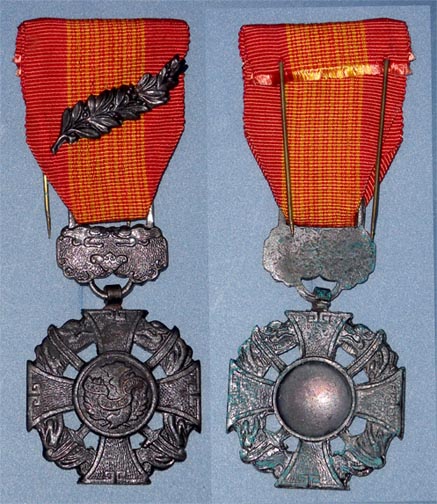
Vietnamese made example
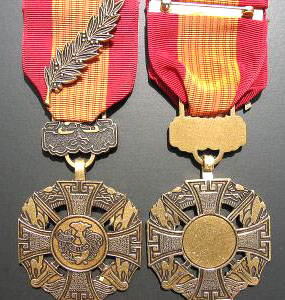


United States made example


                 An unsubstantiated rumor of a "widow`s" Gallantry Cross given to the spouses of those killed in action has long existed among collectors. Such crosses are said to be signified by having a "black" color to the medal. However, this has never been proven, and it is generally accepted the "darker" colored medals were simply the result of different composites being used to mold the medals, and also the effects of aging.
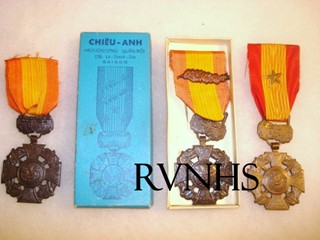
Three Vietnamese made Gallantry Crosses with Issue Box, note the variances in medal color.


Wednesday, September 24, 2014

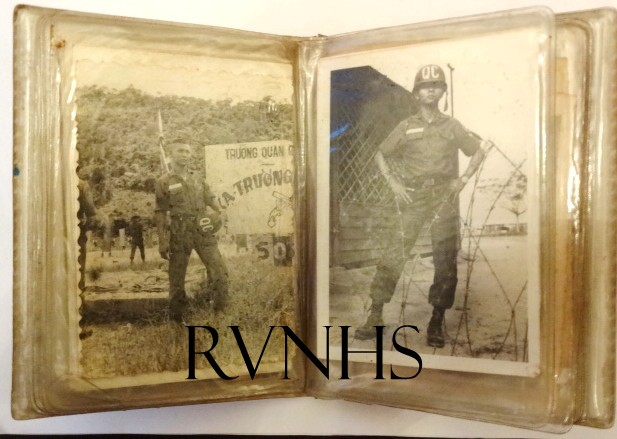
Quân Cảnh Photo Album


             RVNHS currently houses over 10,000 original photographs pertaining to the armed forces of the Republic of Vietnam, circa 1950s-1975. These photos are all personal photographs taken and collected by regular servicemen and women. A goal of RVNHS is for these to one day be digitalized and collected into a database that can be easily accessed for research by the public.


             Most of these photographs take the form of "snapshots" of certain individuals or groups, on duty or at leisure. Many of these images have inscriptions on the reverse noting the identity(ies) of the subjects. Unfortunately, however, the bulk of these images do not. Giving names to these faces may be lost to history, but, nonetheless these visual records serve as a useful means for exploring the history of the Republic of Vietnam.

             It is a very unfortunate common practice that photo albums are often broken up. Individuals selling photographs often choose to take an album apart and sell images individually. This is true for many historical subjects, and the damage this causes is irrevocable. Breaking up an album or personal collection of photographs relating to one individual or group results in the photographs losing their historical context, and often case, their identities as well. The situation for albums associated with the military of the Republic of Vietnam is all the more difficult due to the experience of post-1975 reeducation and suppression of anything related to the former republic. Families fleeing the country typically did not have the luxury of taking mementos, such as photo albums. And, for those left behind, keeping a collection of photographs of a family member who served in the Republic of Vietnam military was dangerous as residences of former soldiers and government workers were subject to frequent searches by political police in the postwar years. For these reasons, photographs of Republic of Vietnam military personnel were often removed from albums or otherwise destroyed.

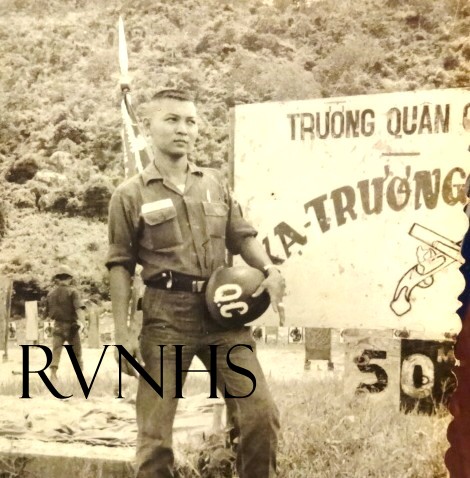
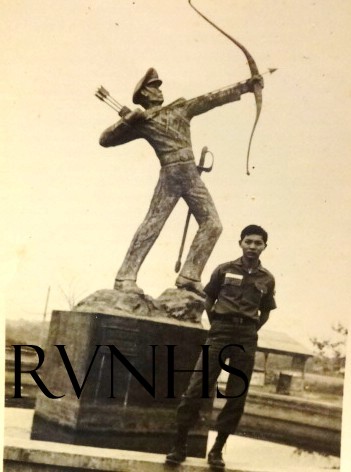
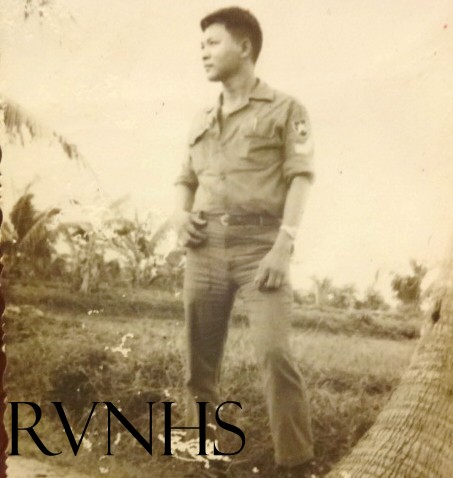
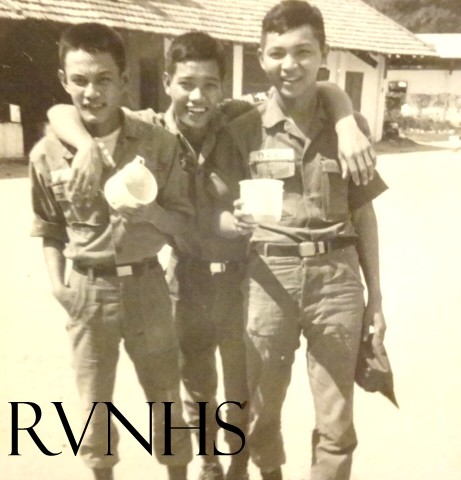
        RVNHS has been able to acquire a small number of albums over the years. Below is an example of photographs from one such album, in this case a  Quân cảnh  (Military Police) album. Sadly, these photos do not come with any descriptions or names. But, they appear to related to one individual during his time in training for the military police.


Monday, August 25, 2014

Early ARVN Field Cap


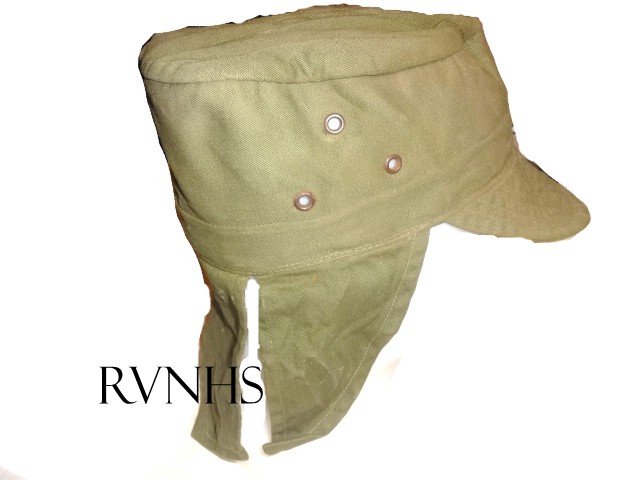
                      In the early to mid 1960s, a distinctive soft olive drab field cap with three neck flaps was in use by the military of the Republic of Vietnam. This cap was most common for army infantry units, but examples of these caps in use by members of various branches of the armed forces can be located in period photographs.

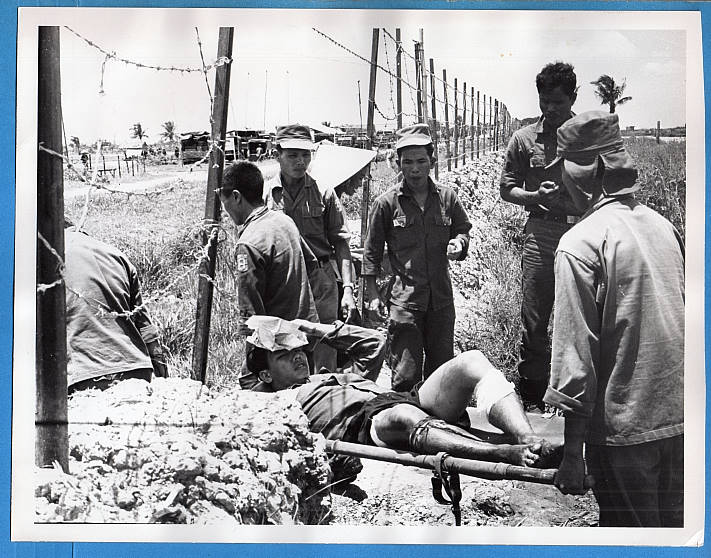
A stretcher bearer from the 9th Infantry Division in an early pattern ARVN field cap.

                   The "soft" texture of these caps allowed for easy wear beneath a helmet. However, the neck flaps proved less popular. Contemporary images often show soldiers wearing these caps with the flaps folded upwards inside the cap. In an interview conducted by RVNHS, a veteran who was issued such a cap recalled how he and members of his unit found the flaps to be uncomfortable, and typically removed them. It was perhaps for this reason by the late 1960s these caps were largely phased out, replaced with a stiffer crowned field cap, which many felt was "smarter" looking.


Sunday, July 13, 2014

Army Football Team Guidon

                      One of the recent additions to our website was this guidon commemorating a football game played by a team from the Army of the Republic of Vietnam's 2nd Supply and Security Battalion. The unit served in the 2nd Military Region, and the game was played on April 25, 1971.


        Football was (and is) a popular sport in Vietnam. The Republic of Vietnam was one of first Southeast Asian nations to join FIFA, and was a founding member of the Southeast Asian Peninsular Games (SEAP), today known as the Southeast Asian Games (SEA). Republic of Vietnam military units often organized football teams from among their personnel to play against other military units or civilian clubs. Such activities helped to maintain morale and boost comradery. Guidons were commonly created to commemorate games, and would often hold pride and place in unit mess halls and headquarters.

 
Members of the Republic of Vietnam team at the Southeast Asian Peninsular Games (SEAP) in 1959 with game commemoration guidon.

Thursday, July 3, 2014

RVNHS VIRTUAL MUSEUM UPDATE

After a bit of a hiatus, the RVNHS Virtual Museum has been updated. New pieces have been added to different sections. Please browse the site to view recent additions:


Wednesday, November 6, 2013

New Server Host

As some of you may have noticed the RVNHS website was down for roughly a week recently. This was the result of our transfer of the site to a new hosting service. We sincerely apologize for any inconvenience. The website is now fully back up and running, as is our email account at:   info@rvnhs.com
 
Thank you for your understanding, and we apologize for this minor "glitch."

Monday, October 14, 2013

ARVN 9th Infantry Regiment Captured Viet Cong Flag

ARVN Airborne Officers with Captured Communist Flags
 
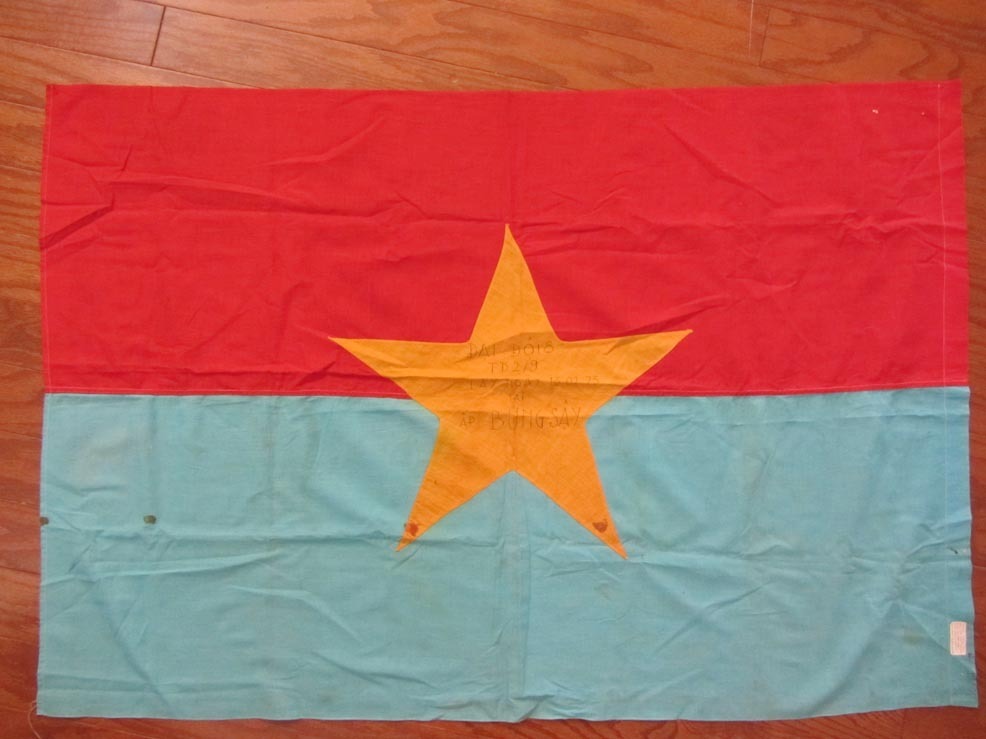
As a general practice, RVNHS only acquires material relating to the Republic of Vietnam and its armed forces. However, a slight exception we made some months ago was this period flag of the National Liberation Front, AKA "Viet Cong / VC." The reason for this exception was the unique feature that this flag was captured and kept as a souvenir by the 8th Company of the 2nd Battalion of the 9th Regiment of the 5th Infantry Division of the Army of the Republic of Vietnam.
The flag is marked in Vietnamese as having been captured by members of this unit on Highway 13, near Chan Thanh, on February 15th, 1973.
 
The 9th ARVN Infantry Regiment Captured Flag
 
The flag is signed by officers of the 8th Company, and it was later given to the unit's American advisor who brought it back to the United States. And, this is how it has been kept in the years since, before coming into our possession recently. Captured enemy flags are among the possessions veterans tend to keep, but although such flags captured by American forces are common, it is rare to encounter a piece with strong provenance marked to an ARVN / QLVNCH unit as most of these stayed in Vietnam and were lost or destroyed in 1975.


Insignia Variations for the 9th ARVN Infantry Regiment