Sunday, March 15, 2015

War Dogs in the QLVNCH / ARVN


Dog Teams at the QLVNCH Dog Training School
January 7, 1972.
      The military of The Republic of Vietnam employed K-9 teams in the same way as armies throughout the world continue to do in present day. The "war dogs" served vital roles as scouts, security, and taking on dangerous tasks that their human counterparts were unable to perform. Each dog was partnered with a trainer who worked and lived side-by-side with the dog virtually twenty-four hours a day. The strong bonds formed between the men and the canines was not unlike that between their human fellow servicemen and women, and, like their human brothers and sisters in arms, the dogs were also susceptible to falling casualty in combat.
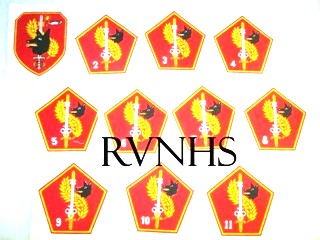
QLVNCH Dog Unit Patches. Top Left: Dog Training School, Units 2-11,
RVNHS Collection.
       Dogs served in all branches of the military. Trainers either directly enlisted in the military to become a trainer, or were selected from already serving members in regular units. Veterinary units also existed to maintain the dogs` welfare and offer first aid. German shepherds were by far the most common breed that served in the republic`s military, but examples of breeds in the service can also be found.
QLVNCH Dog Training School Flag.
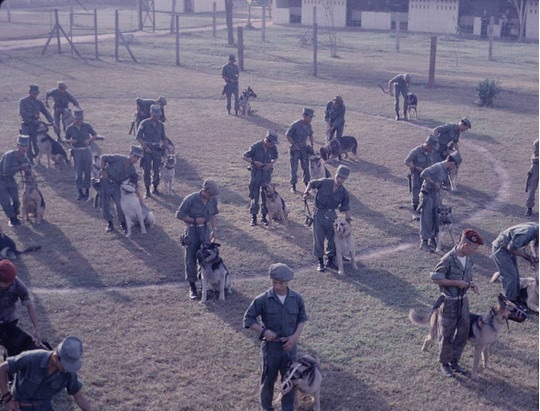

Dog Teams at the QLVNCH Dog Training School,
note the uniforms of different branches of the trainers, 1960s.


Dog Trainer and Dog at the QLVNCH Dog Training School,
January 7, 1972.


Dog Teams at the QLVNCH Dog Training School, 1960s.


Dog Teams exercising at the QLVNCH Dog Training School, 1960s.

Wednesday, March 11, 2015

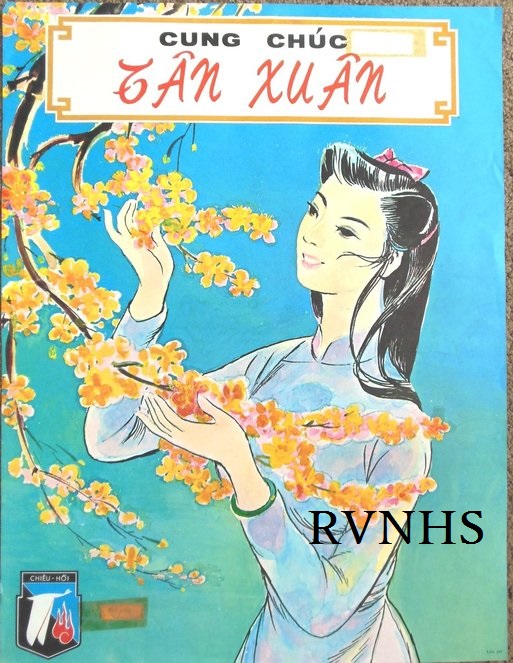
Chiêu Hồi Program Poster


Chiêu Hồi Program Poster, ca. 1960s, RVNHS Collection.
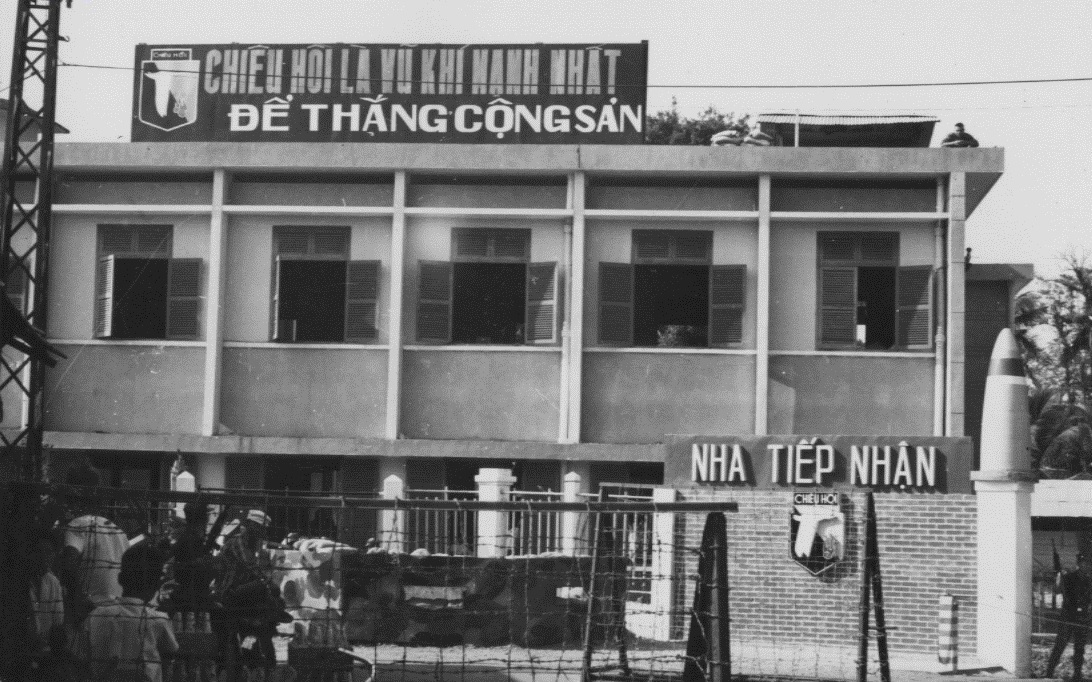
             The Chiêu Hồi Program was a campaign started by The Republic of Vietnam to encourage defections from Communist operatives to the side of the republic. It began on a small scale in the early years of the republic, but became a major program by the late 1960s. It was staffed by military personnel from The Republic of Vietnam assigned to the program, as well as civilian staff and volunteers. The campaign consisted of leaflets, posters, and other material encouraging defection being distributed in areas of enemy activity. Those enemy personnel who took up the offer were then taken to centers where they were gradually integrated into the republic. Many defectors chose to serve in the ranks of the military of The Republic of Vietnam while others took on roles of intelligence operatives for the republic, or returned to civilian life. In total, upwards of 100,000 enemy personnel defected to the republic through the program.
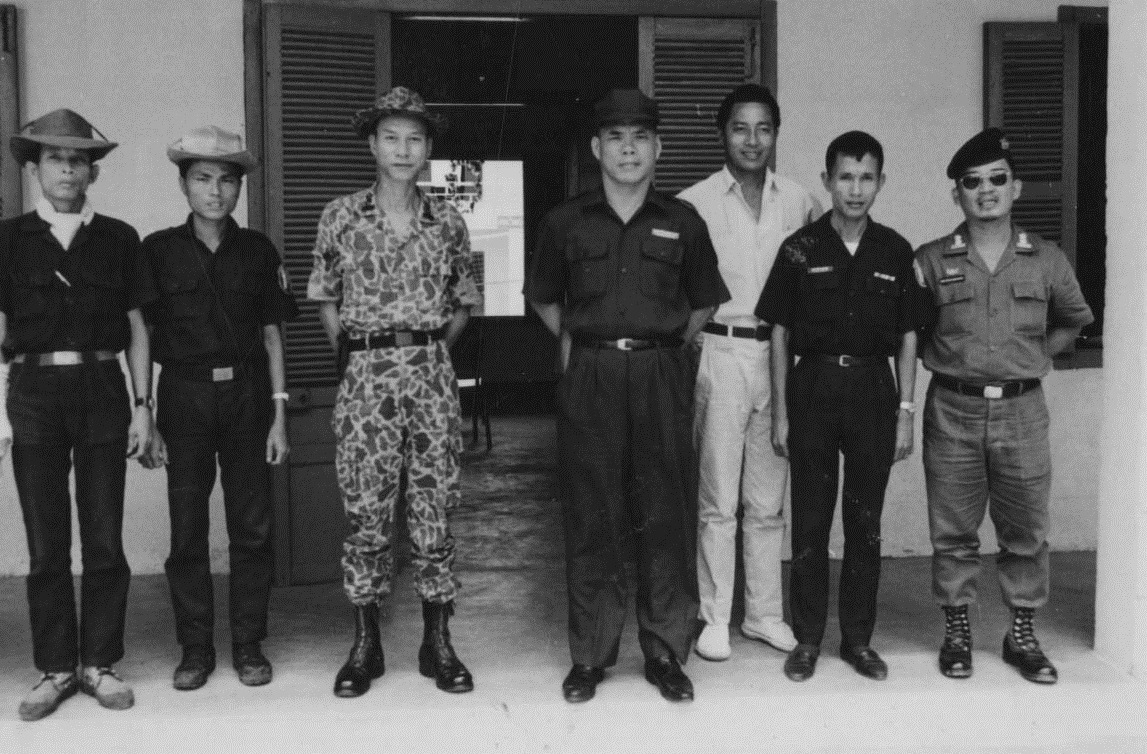
Chiêu Hồi military and civilian staff,
(note the black uniform of the Chiêu Hồi military personnel), 1960s.
        In this posting, we would like to highlight an original Chiêu Hồi Program poster from the RVNHS Collection. The theme of the poster is a common one for the visual material of the program. Tranquility, peace, and happiness were highlighted. Enemy soldiers were encouraged to think about their families and loved ones, and consider the strains their activities against the republic were putting on them.

Chiêu Hồi themed postage stamp, RVNHS Collection.

General Do Cao Tri giving a speech at a Chiêu Hồi center, 1960s.

A Chiêu Hồi center, 1960s.

Chiêu Hồi and other military personnel, 1960s.

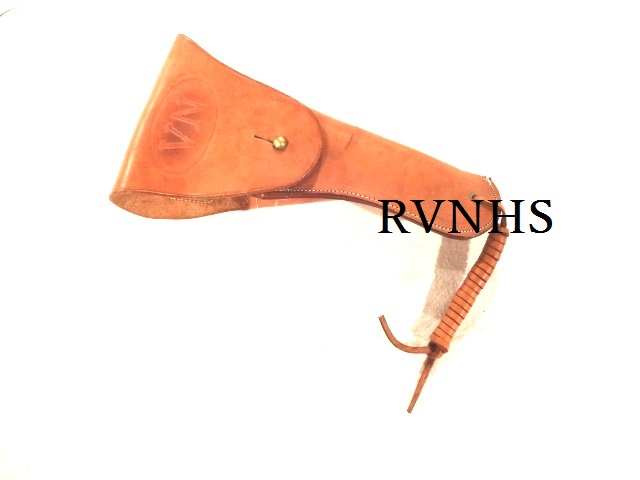
QLVNCH "VN" Holster ARVN


QLVNCH issue "VN" Leather Holster, RVNHS Collection.
                   A variety of leather equipment was utilized by personnel in all branches of The Republic of Vietnam military. A soldier acquired this equipment essentially in two ways. It was either issued to the soldier or acquired at the soldier`s own expense, "private purchase." For the most part, leather holsters produced in the republic were unmarked. United States military holsters often bore a "US" embossed on the leather, and as a portion of the equipment issued to soldiers in the republic was sometimes United States surplus, many soldiers carried leather holsters with an embossed "US."          
         There is one pattern of holster known that was made with an embossed "VN." It was made for a .45 caliber type sidearm, and appeared in a brown/natural leather color, unlike other leather holsters which were usually black. Bearing a "VN," these were obviously produced for soldiers of The Republic of Vietnam. However, the exact details as to where these were  produced, and how widely they were issued is not known. Evidence shows them being for sale by military tailors in Vietnam, but these shops invariably only sold these, and did not produce them. These holsters also have a degree of uniformity in design and material quality. This contrasts with holsters made in Vietnam during the time, which often varied greatly. For this reason, it remains to be known whether these holsters were produced in Vietnam or were made in another country by contract. An example of the latter would be the canteens and flak jackets bearing QLVNCH markings, which were produced in other countries (such as South Korea) under contract for and issued to the QLVNCH.

Sunday, March 8, 2015

QLVNCH Music Sheets ARVN


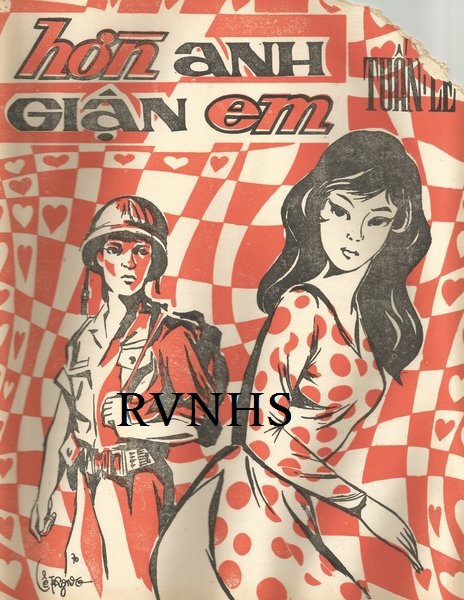
Military Themed Music Sheet, RVNHS Collection.
           Music was just as popular in The Republic of Vietnam Armed Forces as any military force throughout history. Between 1955 and 1975, numerous musical works were created on themes related to the soldiers of the republic. In this posting, RVNHS would like to show a sampling of the many music sheets in the collection, which relate to this topic. These music sheets are all dated pre-1975, and were produced in The Republic of Vietnam.


Military Themed Music Sheet, RVNHS Collection.


Military Themed Music Sheet, RVNHS Collection.


Military Themed Music Sheet, RVNHS Collection.


Thursday, March 5, 2015

QLVNCH 10th Infantry Division ARVN


A studio portrait of a 2nd Lieutenant of the 10th Division,
circa 1965-1967, RVNHS Archive.
     Next month will mark the 40th Anniversary of The Battle of Xuan Loc. The brave stand of the Army of The Republic of Vietnam`s 18th Infantry Division in this battle has gone down in history as one of the pivotal events in story of the republic and the Vietnam War. In the lead up to this anniversary, RVNHS would like to post on a little known fact of the 18th Infantry Division. The formation originally began as the "10th" Infantry Division on May 16, 1965. However, the number "10" can have negative connotations in Vietnamese, so after some discussion the name was changed to the "18th" Infantry Division on January 1, 1967. Thus, officially the division existed as the 10th for slightly over a year and a half. Insignia of this "10th" Division is sparse as are photos of it in use. To mark this period of the 18th as the 10th, RVNHS has included an original 10th Infantry Division patch and studio portrait of a 2nd lieutenant in the division during this period (with insignia) from The RVNHS Archive.
10th Infantry Division Patch, RVNHS Collection.

Wednesday, March 4, 2015

Republic of Vietnam Navy Gallantry Cross


Republic of Vietnam Navy Ship HQ1 Tran Hung Dao
(Photo from VNAFMAMN Website)
http://vnafmamn.com/VietnamNavy_history.html

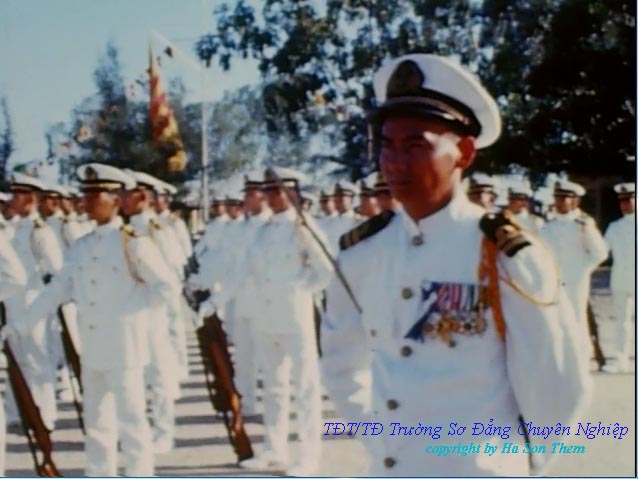
        In addition to the military Gallantry Cross referenced in an earlier post by RVNHS, specific gallantry crosses existed for the navy and air force. In this posting we would like to highlight the Navy Gallantry Cross. Like the Gallantry Cross, the Navy Gallantry Cross was awarded for recognition of bravery and achievement, in this case for any actions undertaken as part of naval operations. The Navy Gallantry Cross was the most widely issued decoration by The Republic of Vietnam Navy ( Hải quân Việt Nam Cộng hòa ).


Navy Gallantry Cross with Bronze Anchor, RVNHS Collection.

        The Navy Gallantry Cross came in four degrees. Rather than stars and palm devices, as was the case for the Gallantry Cross, the Navy Gallantry Cross employed colored anchors. The initial level of the award did not have a device. Subsequent higher levels consisted of bronze, silver, and gold anchors.
Naval officer on parade, Navy Gallantry Cross can be seen on chest.

Sunday, March 1, 2015

1972 TQLC Vietnamese Marine Camouflage Patterns


Vietnamese Marine in Tiger Stripe Camouflage, 1972.

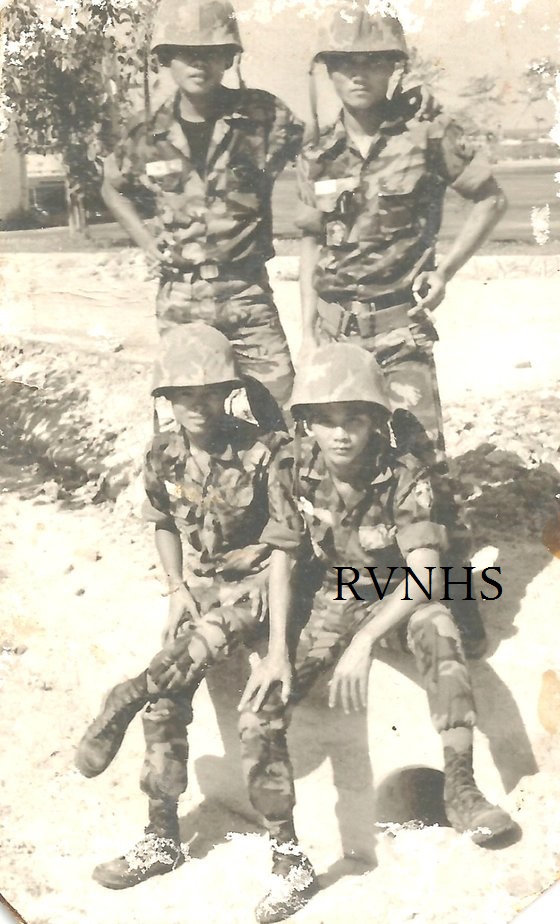
                 The Republic of Vietnam Marines ( Thủy Quân Lục Chiến ) are most commonly associated with wearing specific patterns of tiger stripe camouflage that were almost exclusively issued to the marines. For this reason, these patterns of camouflage are referred to as "Vietnamese Marine" patterns. However, beginning in the late 1960s, and more so into the 1970s, Vietnamese marines began to be issued with the Republic of Vietnam pattern camouflage, which many often refer to as "Ranger Pattern," in light and heavy weight material, just as many of their counterparts in the rangers, airborne, as well as regular army and personnel in many other branches wore. The term "Ranger Pattern" appears as this pattern was first popularly worn by ranger units. However, by 1975, this pattern of camouflage had become the predominant pattern in use throughout the armed forces. Included in this posting is a small series of photographs of Vietnamese marines from The RVNHS Archive, all dated 1972, which show these patterns in use simultaneously.


Vietnamese Marine in Tiger Stripe Camoulfage, 1972.

Vietnamse Marines in Vietnamese "Ranger" Camouflage, 1972.

Vietnamse Marines in Vietnamese "Ranger" Camouflage,
note the tiger stripe boonie on the soldier without helmet, 1972.


Vietnamse Marines in Vietnamese "Ranger" Camouflage, 1972.